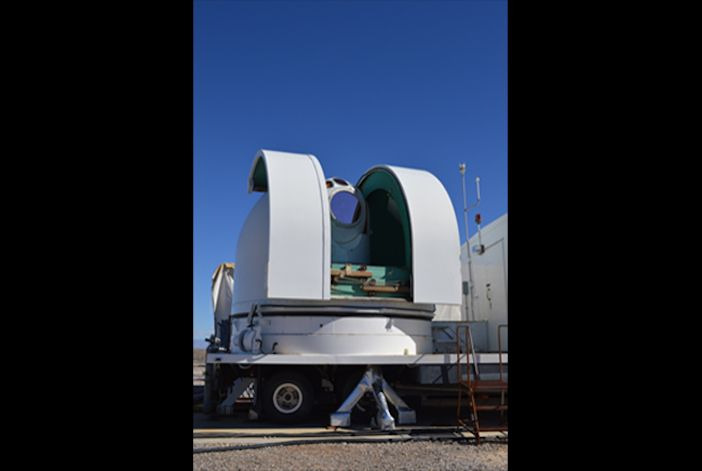
The missile knows when it’s being lased, just like an AIM-9M knows when a plane pops flares. It uses irccm to detect the ir abnormality and then switches to backup IOG and datalink. Unless that laser is strong enough to fry the missile’s internals, it’s not going to stop an IRIS-T.
This size is basicly whats required right now if you want to use LDIRCM to stop IRIST-T
The hell? On what basis did they come to this “conclusion”?
It’s so stupid that BRMs can just spout stuff without any backup and expect everyone to believe them because they have no other choice. Gaslighting the community.
Lately some of the guys bug reports are getting spawn camped, getting closed in spam of 1 to 2 minutes after submission, no reasoning behind the closing some times, other times the BRM put a placeholder reason then proceed to change / edit it afterwards.
I always laugh when I see that marketin lie claim.
They have so much inferior complex to point they can’t accept the fact that Western can produce such strong platforms while some their vehicles has fantasy level performance on certain aspects.
Nope, the sun would be on the right (according to the shadows of the trees).
Also look at the missile frame by frame: It pulls insane AoA but it seems like its inertia is so high, that even over 60° AoA (nearly 90° if I see that right before the missile leaves the screen) doesn’t let it change directions towards the target. As if the booster is either way too weak or the missile weighs a ton.
The best part in your post: The sensor view shows 40° AoA while it visually pulls 60-70° AoA. The lower missile show 60° AoA while pulling close to 70-80° AoA. Something is extremely brocken here ^^
My guess is that the missile “flies on rails” a certain time after launch, independent of where it actually wants to fly. I would assume it would even pull >90° AoA but still fly and accelerate into another direction.
Edit: I think I know what it was in the video: It is the fixed double loft into the calculated target direction after launch which is always flown with the missile being effectively “on rails” during that phase.